
Metallized Polyester (MetPET) Packaging: High Barrier Without the Foil
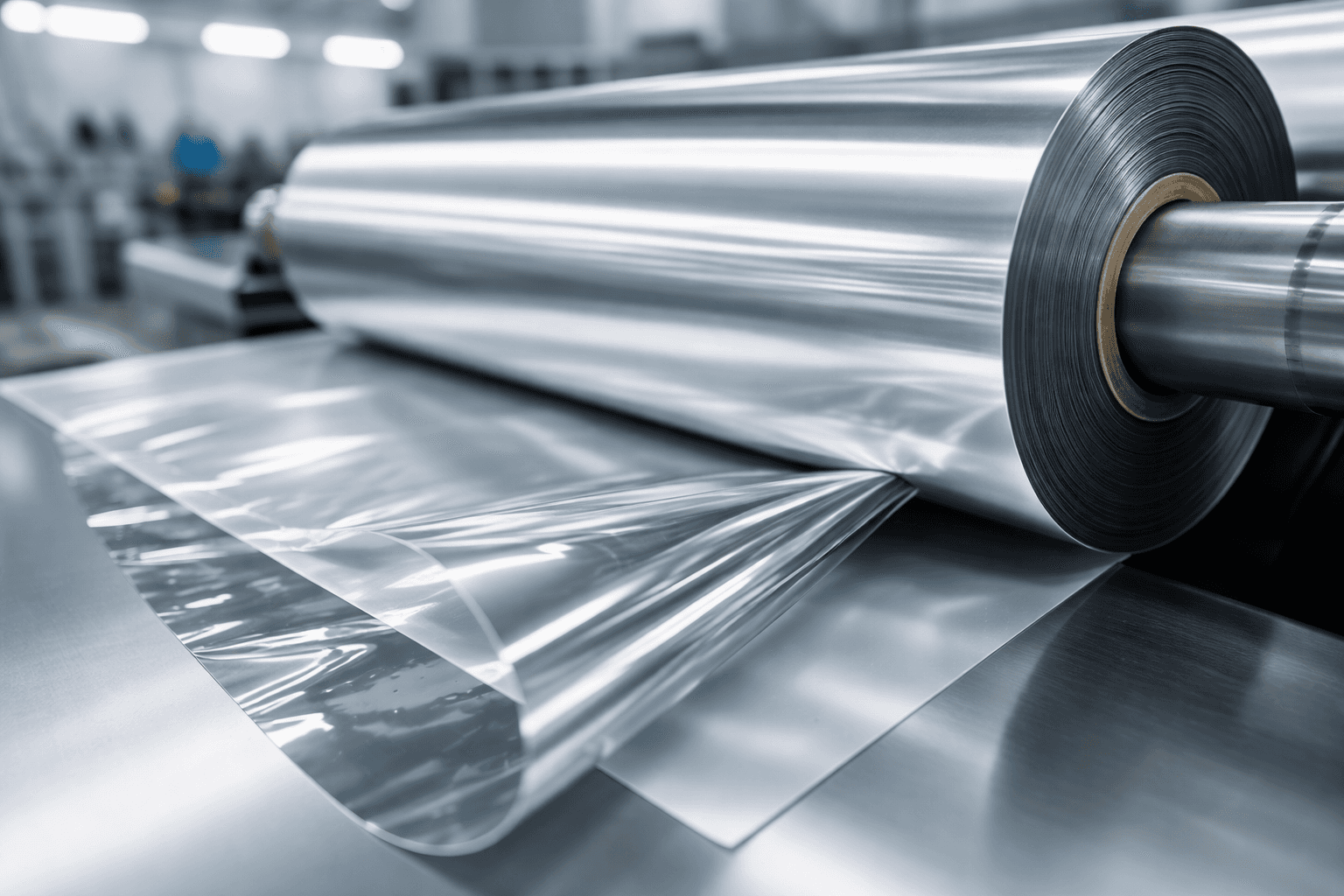
Metallized polyester (often called MetPET) is a high-performance flexible packaging material used when barrier protection matters more than visibility. It delivers excellent resistance to oxygen, moisture, and light while using only a fraction of the metal found in foil structures.
MetPET is commonly chosen when products need extended shelf life, reliable protection, and consistent performance—without the added stiffness or cost of full aluminum foil.
How Metallized Polyester Is Made
Metallized polyester is produced using a process called vapor metal deposition, often referred to as metallizing.
In this process, aluminum is heated until it vaporizes inside a vacuum chamber. The aluminum vapor forms a cloud that condenses onto a cool polyester film substrate, creating a uniform metallic coating. The vacuum environment is critical—it allows the aluminum to deposit evenly without overheating or damaging the plastic film.
This same deposition technology is used in other industries, including reflective coatings for sunglasses and specialty plastic components. While aluminum is most common for packaging, the process can be adapted to deposit other metals for specialized applications.
A Microscopic Metal Layer With Powerful Barrier Properties
The aluminum layer applied to metallized polyester is extremely thin—typically about 30–50 nanometers (0.03–0.05 microns). Despite its minimal thickness, this layer significantly improves barrier performance.
When aluminum is exposed to oxygen, it naturally forms aluminum oxide, which provides excellent resistance to oxygen and moisture transmission. One important benefit of aluminum oxide is that it is self-healing: if the oxide layer is lightly disturbed, it can reform through oxidation of the underlying aluminum.
This allows MetPET to deliver strong barrier protection while remaining lightweight, flexible, and efficient.
Where Metallized Polyester Performs Best

MetPET is commonly used when packaging must protect products from:
Oxidation
Moisture
Light degradation
Typical applications include:
Snack foods and confections
Coffee and dry beverage products
Nutritional powders
Shelf-stable foods
Compared to clear polyester, metallized polyester can dramatically extend shelf life while maintaining good mechanical strength and runnability on high-speed packaging lines.
Flat Sheet Barrier vs. Real-World Performance
One of the most important concepts to understand with metallized films is the difference between flat sheet barrier and actual package barrier.
Barrier values shown on datasheets are typically measured on flat, unconverted film. In real packaging applications, films are stretched, folded, sealed, and formed into bags or pouches. These mechanical stresses can cause the ultra-thin aluminum layer to crack or craze, reducing barrier performance.
Because the aluminum layer is so thin, if it is completely fractured or removed in localized areas, the barrier protection in those areas is lost. This is why package design, forming conditions, and structure selection are critical when using MetPET. To learn more about this, read our in depth article here.
Appearance and Transparency Limitations
Aluminum is inherently opaque. With a refractive index of approximately 1.44, the deposited metal layer reflects light rather than transmitting it. As a result, metallized polyester does not allow product visibility.
If a clear product window or full transparency is required, MetPET is not a suitable candidate, and alternative materials or hybrid structures should be considered.
Best Uses and Key Trade-Offs
Metallized polyester is a strong choice when:
Shelf life is a top priority
Oxygen, moisture, or light protection is required
Consistent runnability is important
Metallized polyester may not be ideal when:
A clear product window is required
Packages experience extreme forming or mechanical stress and/or contents are incredibly sensitive to oxidation and/or shelf life is very long.
Absolute maximum barrier (foil-level) performance is necessary
Understanding these trade-offs early helps teams avoid costly redesigns later in development.
Why Metallized Polyester Remains a Core Barrier Material
Metallized polyester delivers a reliable balance of barrier performance, efficiency, and cost control. It allows brands to protect sensitive products, maintain production efficiency, and extend shelf life without over-engineering the package.
That balance is why MetPET continues to be a core material in flexible packaging systems designed to perform reliably across production, distribution, and end use.
Learn More About Packaging Materials
Choosing the right packaging material starts with understanding how it performs beyond the datasheet. If you’re comparing metallized polyester with foil, PET, or other flexible packaging materials, evaluating real-world performance early can help prevent unexpected challenges later.
Explore our Packaging Made Simple series to learn more about the materials, structures, and design considerations used in flexible packaging today.
About the Author