
Post-consumer recycled content (PCR) has moved from a sustainability ambition to an operational reality in packaging. Between retailer pressure, brand commitments, and new regulations, packaging teams are increasingly expected to incorporate PCR—often on aggressive timelines and without compromising performance.
The challenge is that PCR isn’t a single material or a simple switch. It’s a variable input shaped by collection systems, processing methods, resin chemistry, and real-world contamination. Understanding those variables is the difference between a PCR program that scales and one that stalls.
This article takes a technical look at PCR in packaging applications: where it comes from, how different resins behave, the most common challenges teams encounter, and how the next phase of recycling technology and regulation may change what’s possible.
What PCR Really Means (and why the definition matters)
Post-consumer recycled content refers to plastic material that has completed its intended use, been discarded by consumers or commercial users, collected through recycling systems, and then reprocessed into usable resin. In post-consumer recycled content packaging, this distinction matters.
PCR is different from post-industrial recycled (PIR) material, which comes from manufacturing scrap that never reached a consumer. PIR is often cleaner and more consistent, but it does not always satisfy regulatory or brand requirements tied specifically to post-consumer waste diversion.
As recycled-content mandates and claims become more formalized, clarity around these definitions is no longer optional. Brands increasingly need PCR that is defensible—not just functionally usable, but traceable and verifiable.
Where PCR Comes From—and Why Quality Varies
The performance of PCR resin used in packaging is largely determined long before it reaches a converter. Collection and sorting systems set the baseline.
PCR feedstock typically comes from curbside residential recycling, deposit return systems, commercial recycling programs, or specialty take-back streams like retail film drop-off. Each source introduces different risks. Residential streams tend to be more contaminated but higher in volume, while deposit systems often yield cleaner material. Commercial streams can be consistent but limited in scope.
After collection, material must be sorted by resin type, color, and cleanliness. Small differences at this stage—residual paper fibers, inks, adhesives, or incompatible polymers—can show up later as odor, visual defects, or sealing problems in finished packaging.
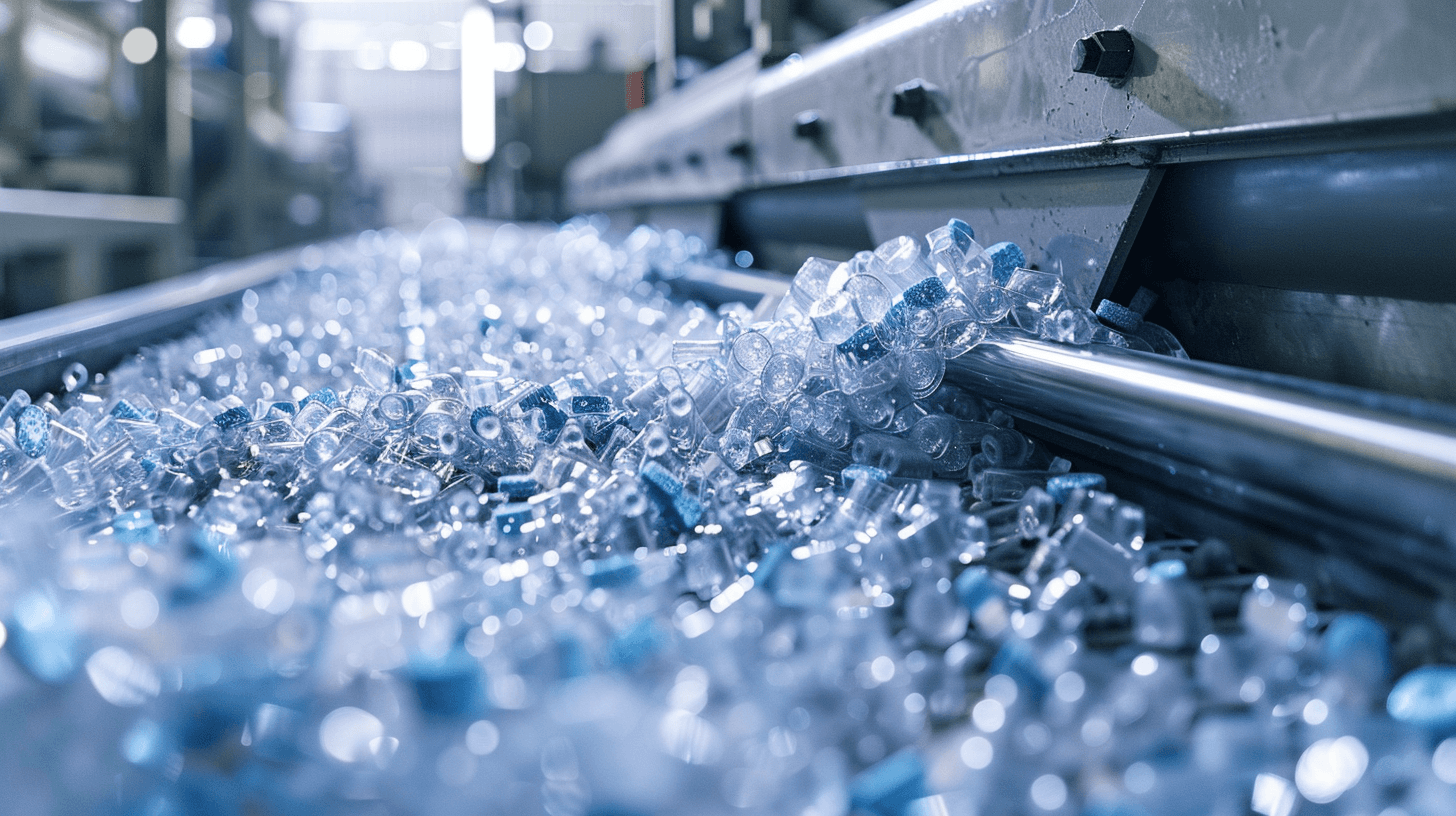
Reprocessing then converts that sorted material into resin through grinding, washing, melt filtration, and extrusion. Even when two PCR resins meet the same specification on paper, differences in feedstock and process control can lead to very different behavior during printing, laminating, or filling.
In practice, PCR is not a uniform input. It’s a spectrum, and the farther downstream you are in the packaging process, the more that variability matters.
How Different PCR Resins Behave in Packaging
Not all PCR resins present the same opportunities or risks. Each PCR resin behaves differently depending on feedstock quality, prior use, and reprocessing method.
Recycled PET (rPET) is one of the most established PCR streams, largely due to beverage bottle recycling infrastructure. In packaging, it can perform well in applications that tolerate some haze or color shift, but high-clarity or taste-sensitive formats require tight process control and carefully vetted sources.
Recycled HDPE often comes from milk jugs, detergents, and household products. Natural HDPE streams are highly sought after for packaging applications, while mixed-color streams limit aesthetic flexibility. Odor can be an issue when feedstock includes fragranced products.
Post-consumer recycled polyethylene films (LDPE and LLDPE) are among the most challenging PCR materials to use consistently in packaging. Film streams are prone to contamination and melt-flow variability, which can affect seal integrity and gauge control. These resins can be effective in the right applications, but they demand disciplined qualification and realistic expectations.
Recycled polypropylene (rPP) remains constrained by sorting complexity and odor challenges. While promising for certain rigid packaging formats, it can be difficult to deploy in brand-sensitive or food-adjacent applications without additional processing.
Across all resin types, the pattern is the same: PCR success depends on matching material quality to application risk.
Mechanical vs. Chemical Recycling: Why the Process Matters
Most PCR used today in packaging comes from mechanical recycling, where plastics are melted and reprocessed without intentionally breaking polymer chains. This approach is well established but inherently tied to feedstock quality.
Emerging technologies, including solvent-based purification and chemical recycling, aim to address some of mechanical recycling’s limitations. By removing additives or breaking polymers down into molecular building blocks, these processes may produce more consistent outputs from harder-to-recycle inputs.
However, regulatory frameworks for chemically recycled content, especially mass-balance accounting, are still evolving. How this material is counted, certified, and communicated will shape how quickly it can scale in packaging applications.
The Challenges That Derail PCR Packaging Programs
Most PCR initiatives don’t fail because teams lack commitment. They fail because technical realities surface late.
Variability is the most common issue. Two shipments of PCR resin can behave differently on press or on the filling line, even when specifications appear identical. Odor remains a persistent risk, particularly for post-consumer polyolefins used in packaging. Contamination can introduce gels, specks, or seal failures that undermine both performance and brand perception.
Aesthetics also matter. PCR often brings color and clarity limitations that clash with legacy packaging design expectations. When these constraints aren’t acknowledged early, decisions become emotional rather than strategic.
Finally, documentation and verification are becoming critical. As claims and regulations tighten, recycled content must be provable—not just present.
Regulation Is Accelerating the Shift
PCR adoption is being driven as much by policy as by sustainability goals, as recycled content packaging requirements continue to expand globally. In Europe, recycled-content targets for beverage bottles are already set for 2025 and 2030. In California, minimum PCR requirements for beverage containers are increasing steadily through 2030.
At the same time, broader packaging regulations—such as the EU’s Packaging and Packaging Waste Regulation—are reshaping expectations around recyclability, material use, and reporting. For brands, regulatory uncertainty itself becomes a risk if packaging systems aren’t designed to adapt.
What the Future of PCR Likely Looks Like
Over the next decade, several trends are likely to reshape PCR use in packaging.
Recycling infrastructure for flexible packaging is improving, with new technologies aimed at producing higher-quality recyclables. Certification and chain-of-custody requirements will continue to tighten, making verification standard rather than optional. Design-for-recycling principles will increasingly influence packaging decisions upstream, improving PCR quality downstream.
At the same time, PCR will remain a constrained resource. Demand is rising faster than supply, which means availability, pricing, and quality will continue to fluctuate.
Making PCR Work in the Real World
Successful PCR adoption rarely starts with the most demanding packaging application. Teams that scale effectively define what cannot change—seal strength, shelf life, line speed—and then choose applications where flexibility exists.
They trial methodically, qualify multiple PCR resin sources, and align claims strategy early. Most importantly, they plan for disruption rather than assuming stability.
PCR isn’t just a sustainability lever. It’s an operational decision that touches supply chains, compliance, and brand risk all at once.
The Admiral Perspective
At Admiral, PCR conversations rarely stay confined to material selection. For brands navigating PCR in flexible packaging, they quickly become discussions about readiness—how to absorb variability, regulation, and supply disruption without slowing launches or compromising performance.
That’s why PCR decisions are supported by Dedicated Packaging Teams, technical testing, and sustainability tools like Life Cycle Analysis (LCA)—so recycled content becomes a competitive advantage, not a last-minute scramble.
Because PCR will continue to evolve. The question is whether your packaging system is built to evolve with it.
About the Author