
The Three Sustainable Packaging Paths for 2025
There are only a few real, scalable routes for CPG brands today. Everything else is noise.
Path 1: Recyclable (Mono-Material PE)
This is the direction most brands are moving toward.
Pros:
Widely accepted by retailer scorecards
Clear design-for-recycling guidelines
Compatible with many existing pouch formats
Works for many, but not all, products
Cons:
May require structure redesign
Not ideal for aroma-sensitive or oxygen-sensitive products
Path 2: Compostable (Limited but Emerging)
Consumers like the idea, but the infrastructure hasn’t caught up.
Pros:
Strong consumer appeal
Works for low-moisture, dry products
Aligns with emerging retail pilot programs
Cons:
Industrial composting typically required but facilities that take food packaging is almost nonexistent
Weaker shelf-life performance
Higher cost
Not suitable for most mainstream CPG categories
Barrier versions have undesireable raw materials
Path 3: PCR Integration (Adding Recycled Content)
Post-consumer recycled content is becoming a requirement in multiple states.
Pros:
Fits EPR expectations
Strong sustainability story
Can be used in mono-material structures
Cons:
Supply constraints
Potential cosmetic imperfections
Cost variability
The Barrier Tradeoffs No One Talks About
This is where most brands hit the wall.
Switching from foil to recyclable HDPE is not a one-to-one swap. Performance changes. Barrier changes. Shelf life changes.
Key challenges include:
Oxygen sensitivity (especially coffee, snacks, supplements)
Moisture ingress/egress
Aroma retention
Grease and fat migration
Heat and puncture resistance
This is the part suppliers often gloss over but CPG teams can’t.
Every sustainability move must start with barrier science.
EPR Laws: What’s Actually Coming for Brands in 2025–2026
Extended Producer Responsibility (EPR) laws are shifting real costs onto brands.
States already in motion:
California
Colorado
Oregon
Maine
More states are drafting similar rules.
What this means for CPG brands:
You will pay fees based on recyclability and material impact
You must report packaging tonnage and structure
“Design for recyclability” becomes a financial advantage
Non-compliant structures will cost more over time
EPR isn’t theoretical anymore; it’s happening.
Retailer Scorecards Are Quietly Changing Packaging Specs
Retailers are becoming the true regulators.
Walmart, Target, Amazon, and Costco now push suppliers to meet specific sustainability criteria.
Examples:
Walmart’s recyclability index
Amazon’s certification for flexible packaging
Target’s packaging sustainability standards
This pressure often hits faster than legislation and can directly affect shelf placement and vendor approval.
The Admiral Approach: Practical Sustainability That Works
Sustainability only works when the package still performs.
At Admiral Packaging, we combine:
Material science (to get the barrier right)
Next-gen flexo print (to maximize shelf appeal)
U.S.-based supply chain strength (to avoid disruption)
A dedicated packaging team that engineers structures that truly fit the product
We help brands transition to recyclable, PCR, or hybrid films without guessing, compromising performance, or risking costly rework.
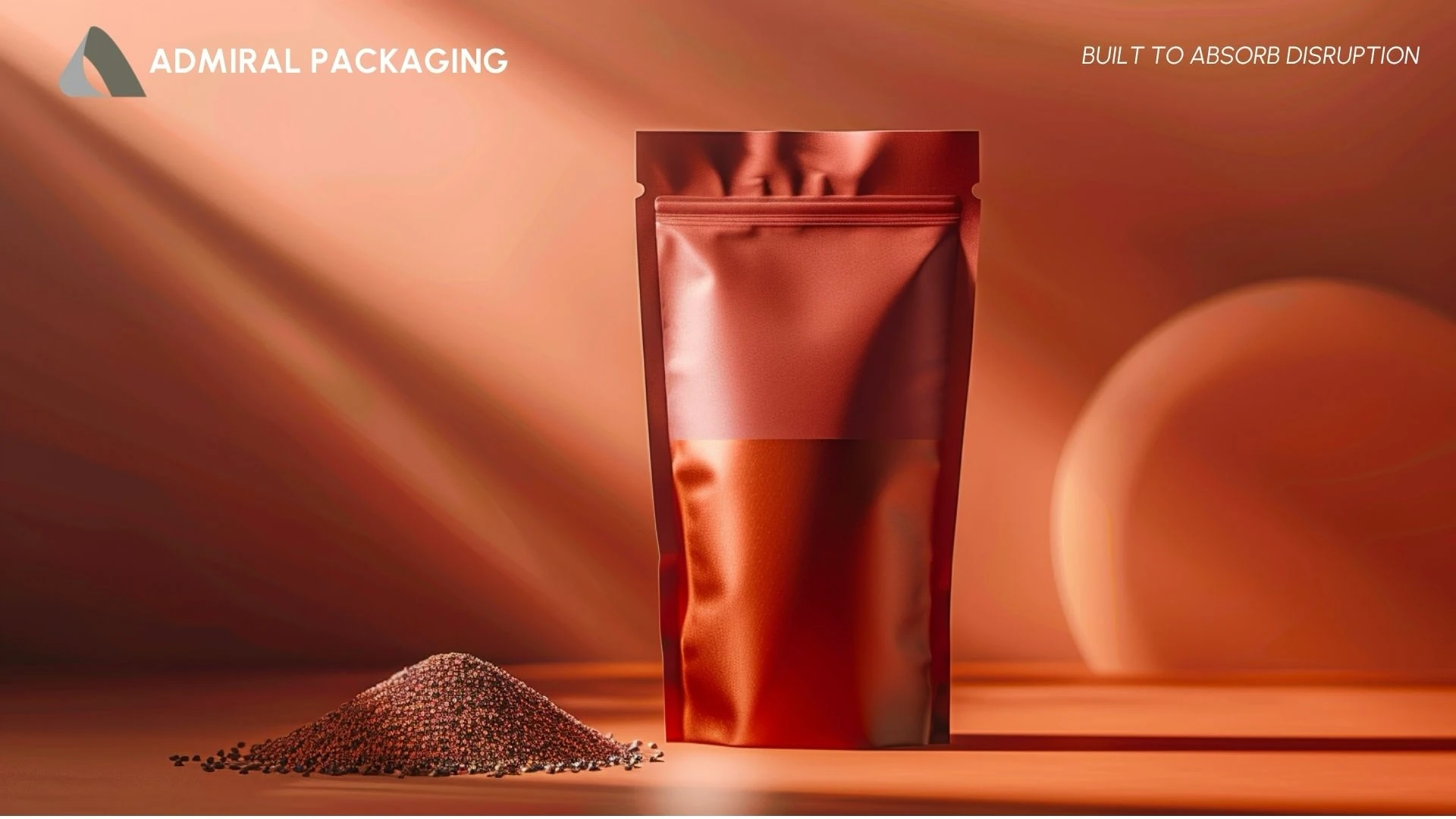
And that’s where we’re built to absorb disruption.
What CPG Brands Should Do Right Now
If you’re planning 2026–2027 packaging roadmaps, here’s the playbook:
1. Audit your current structures
List your barriers, materials, and product sensitivity.
2. Identify which SKUs can move to recyclable first
Start where the barrier requirements are low.
3. Align your packaging plan with retailer guidelines
Scorecards matter as much as laws.
4. Build a recycling-ready or PCR-ready transition plan
Do it SKU by SKU.
5. Test early, test often
Barrier tradeoffs can be devastating to food safety and brand quality.
Get a Sustainability Packaging Audit
Want clarity on what your products need?
We’ll review your:
Current film specs
Barrier requirements
Retail scorecard risks
EPR readiness
Opportunities for recyclable or PCR structures
Let's talk to get a sustainability packaging audit and a clear transition roadmap for 2026 and beyond.
About the Author