

When packaging needs strong barrier protection but still requires product visibility, PVDC coated polyester offers a powerful solution.
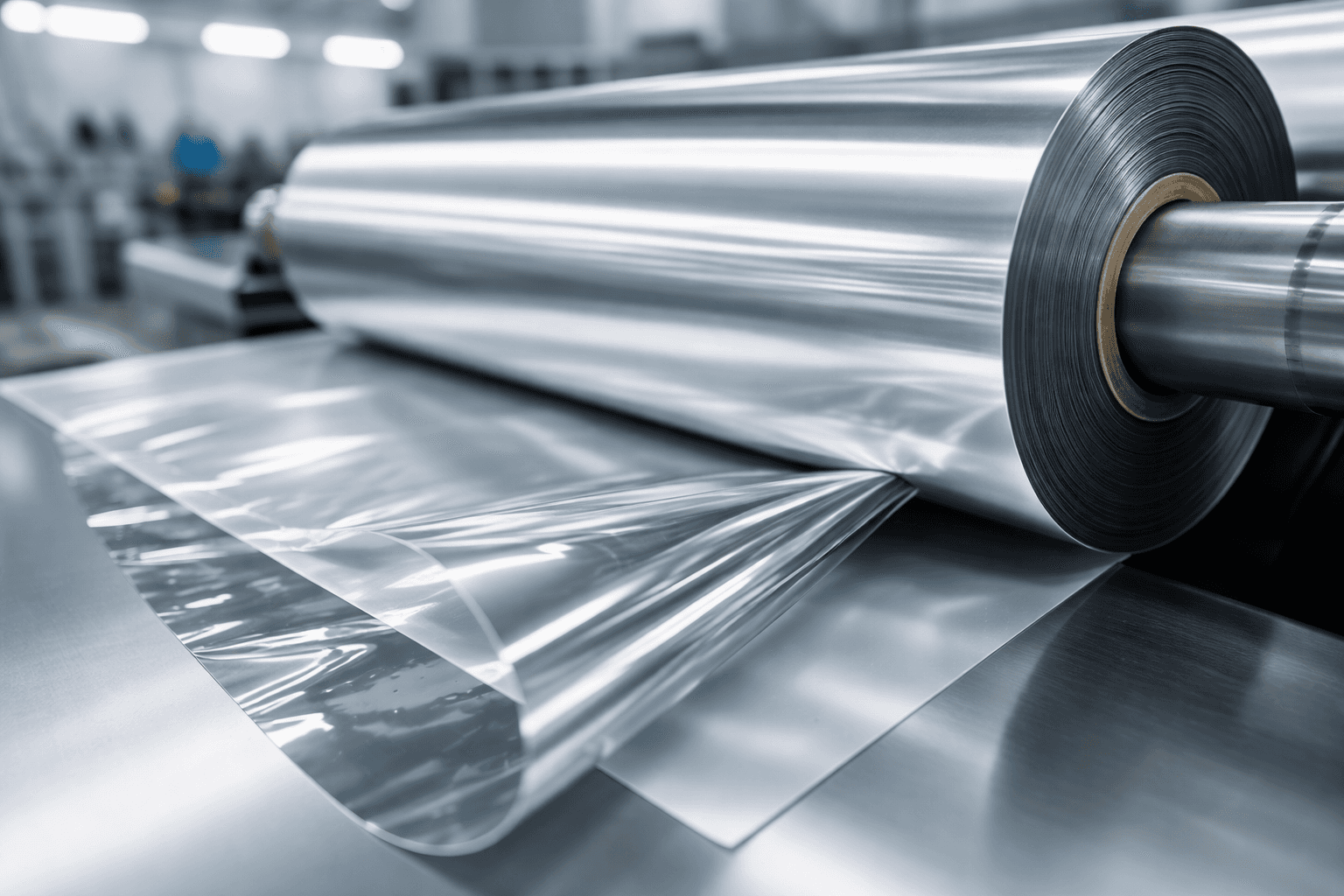
By combining the strength and clarity of polyester (PET) with a thin coating of polyvinylidene chloride (PVDC), this material delivers enhanced oxygen and moisture resistance without the opacity of foil or metallized films.
What Is PVDC Coated Polyester?
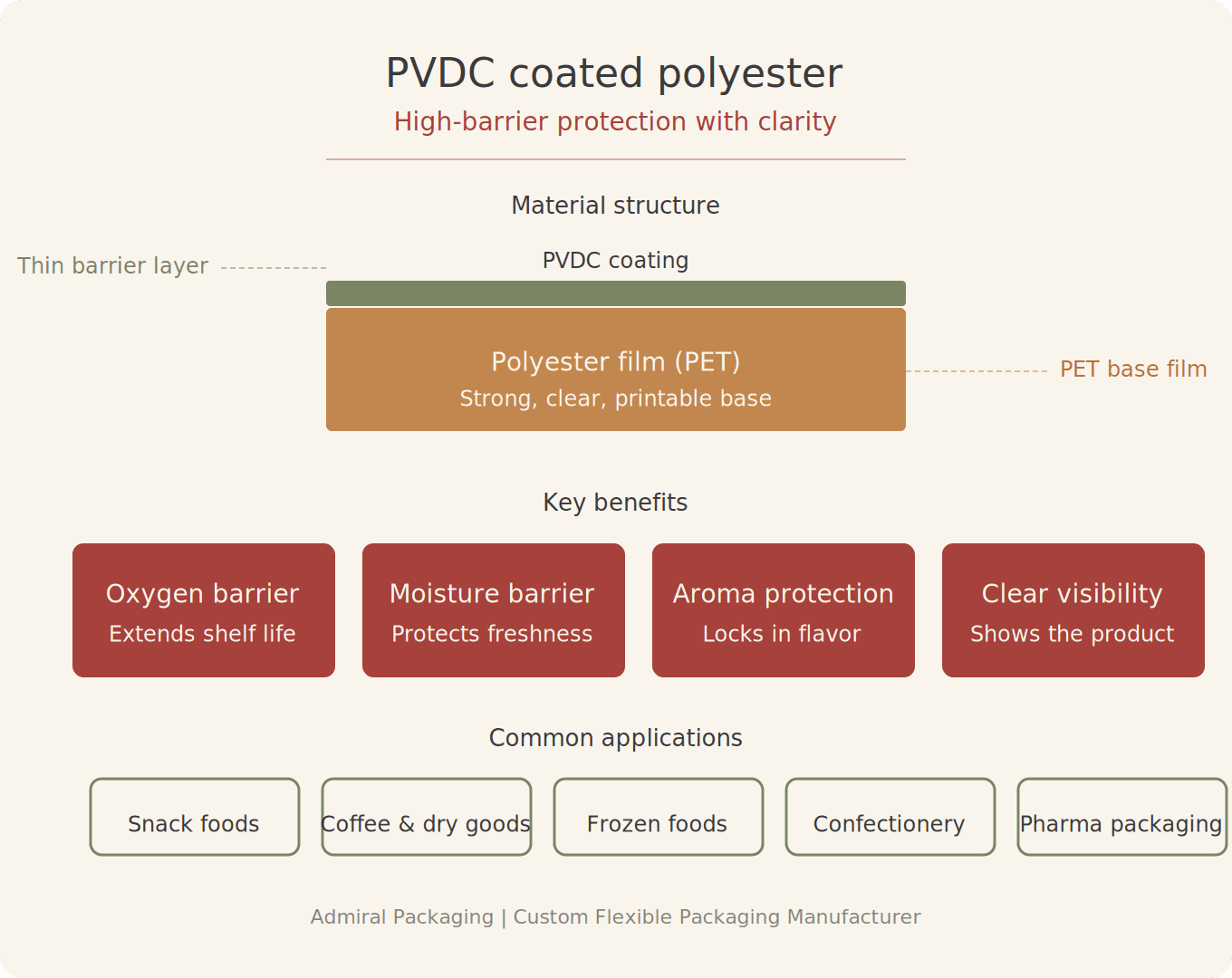
PVDC coated polyester starts with a base layer of polyester film (PET) — known for its strength, dimensional stability, and printability.
A thin layer of PVDC is applied to one side of the film. This coating significantly improves:
Oxygen barrier
Moisture barrier
Aroma protection
Shelf life performance
The result is a clear, high-barrier film commonly used in flexible packaging laminations.
Why Brands Use PVDC Coated Polyester
Strong Oxygen & Moisture Barrier
PVDC dramatically reduces transmission rates compared to standard PET, helping extend shelf life for oxygen-sensitive or moisture-sensitive products.
Product Visibility
Unlike foil or metallized polyester (METPET), PVDC coated polyester remains transparent. This allows brands to showcase product quality while still maintaining protection.
Excellent Print Surface
The polyester base offers strong dimensional stability and works well in high-quality printed laminations.
Good Chemical Resistance
PVDC performs well in applications requiring resistance to oils, flavors, and certain chemicals.
Common Applications
PVDC coated polyester is typically used in:
Coffee and dry goods
Frozen foods
Confectionery
Medical and pharmaceutical packaging
Multi-layer flexible laminations
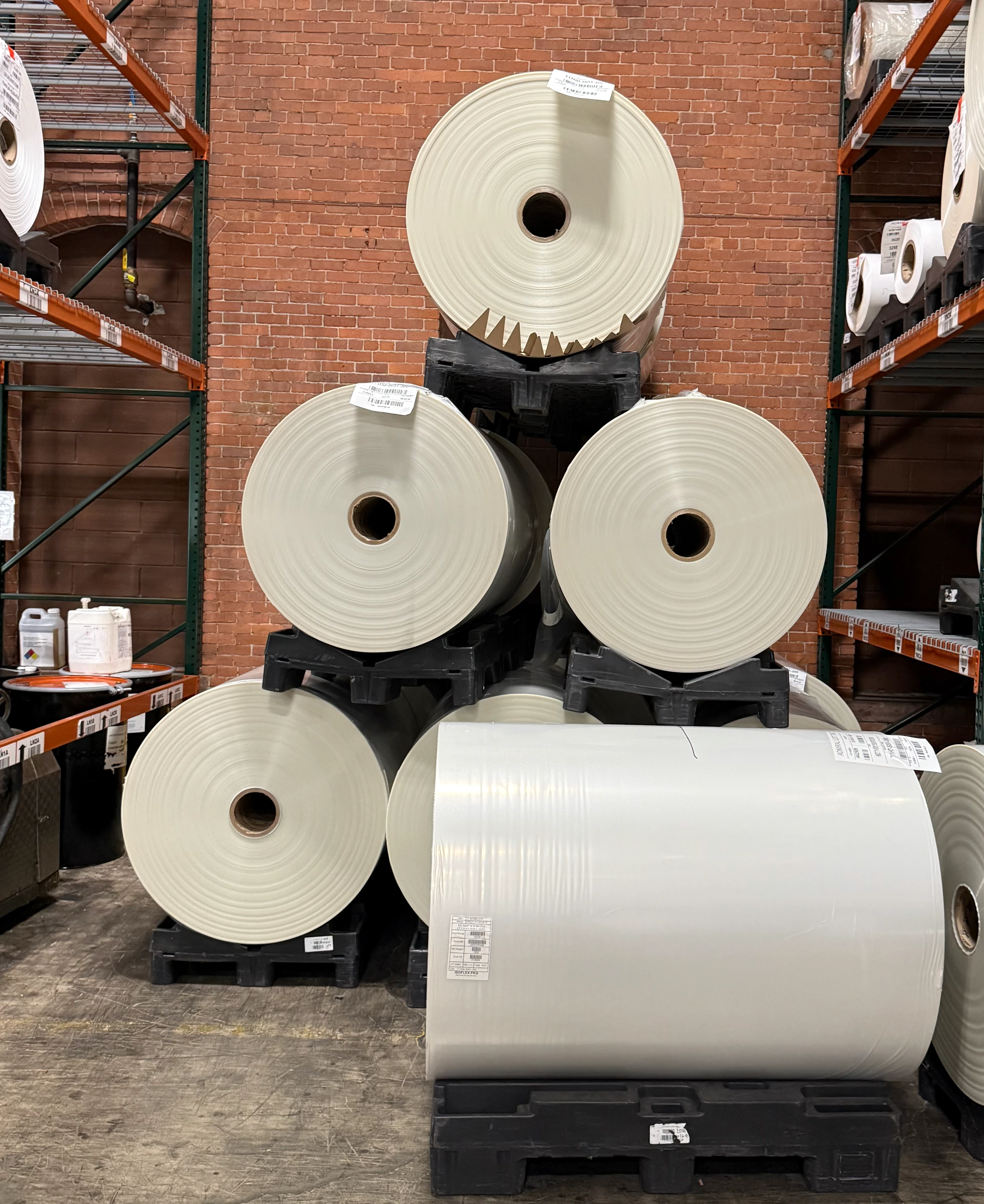
It is rarely used alone and is most often laminated to sealant webs such as PE or CPP.
Limitations & Disadvantages of PVDC Coated Polyester
While PVDC coated polyester offers strong barrier performance, it is not the right fit for every structure.
Here are key considerations:
Recycling Challenges
PVDC is not widely compatible with many existing recycling streams.
It can complicate PET recycling.
It may limit recyclability claims for mono-material structures.
Some brand sustainability initiatives are moving away from PVDC for this reason.
For projects prioritizing recyclability, EVOH or metallized alternatives may be considered instead.
Heat Sensitivity During Processing
PVDC can be sensitive to high processing temperatures.
Overheating may degrade the coating.
Converters must carefully control lamination and sealing temperatures.
While manageable, it requires attention during manufacturing.
Cost Compared to Standard PET
PVDC coated polyester is more expensive than plain PET.
The added barrier performance increases material cost, so it is typically used only when the application demands higher protection.
Limited Extreme Barrier vs. Foil
Although PVDC offers excellent barrier performance, it does not match the near-zero transmission rates of aluminum foil.
For ultra-high barrier requirements (long shelf life, extreme moisture sensitivity), foil laminations may still be necessary.
Regulatory & Environmental Scrutiny
PVDC contains chlorine. While approved for many packaging applications, some markets and sustainability programs are gradually shifting toward chlorine-free alternatives.
This does not eliminate its use, but it is a factor brands should consider in long-term packaging strategies.
PVDC vs. Other Barrier Options
Material | Transparency | Barrier Level | Recyclability | Cost |
|---|---|---|---|---|
Clear | Low | Good | Low | |
PVDC Coated PET | Clear | High | Limited | Medium |
Opaque | High | Limited | Medium | |
Opaque | Very High | Poor | Higher |
Is PVDC Coated Polyester Right for Your Application?
PVDC coated polyester works best when you need:
High oxygen and moisture barrier
Clear packaging
Strong laminate performance
Moderate shelf-life extension
It may not be ideal if your primary goal is:
Fully recyclable mono-material packaging
Ultra-high barrier (foil level)
Lowest possible material cost
If you are evaluating barrier structures for a new product launch or shelf-life extension project, PVDC coated polyester is worth considering — especially when clarity matters.
About the Author